In most management games a goal is a line of text and a number changing. You find out that you conceded; you rarely find out why. In False Nine Manager, every goal plays again straight away, slowed down, with the move that made it drawn on the pitch.
What happens when someone scores
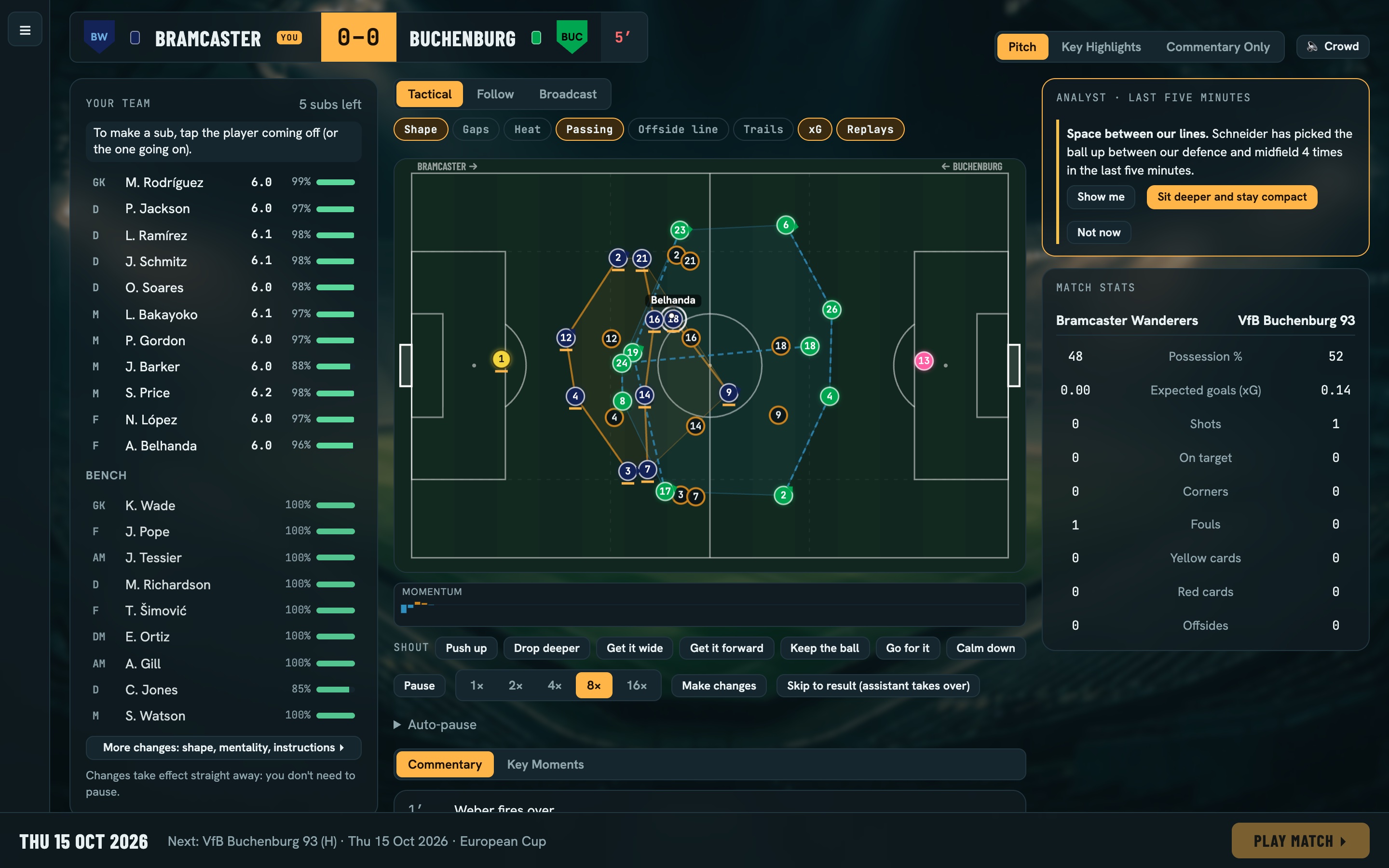
The match engine plays out all ninety minutes as continuous movement: twenty-two players and a ball, positions updated several times a second. Because the whole match is kept as it's played, the view can wind back. When a goal goes in, the pitch rewinds about twelve seconds and plays the build-up again at half speed.
While it plays, each pass in the move is drawn as an arrow from passer to receiver, in order, so you can see the shape of the attack: the switch that pulled your full-back across, the ball into the space between your lines, the run nobody tracked. Then the match carries on from where it was.
Why a management game needs it
The job of a manager is to work out why things are happening and change them. A replay turns "we conceded again" into "their winger keeps getting the ball in behind our right-back". That's something you can do something about: tell the full-back to stay at home, drop the line deeper, or swap the winger in front of him for one who'll track back.
It works the other way too. When your own goals keep coming from the same pattern, you know what to keep doing, and which player to build around.
Any moment, not just goals
Goals replay automatically. Everything else is in the key moments list beside the pitch: shots, saves, cards, injuries. Each has a replay button that pauses the match and shows the moment again from a few seconds before. If you'd rather not stop for goals, switch replays off with the Replays button above the pitch.
Share the moment
During a replay there's a Share button. It saves what's on the pitch, with the score and the line of commentary, as an image you can post. On a phone it opens the share sheet.
Next time: how we made the match itself look like football.